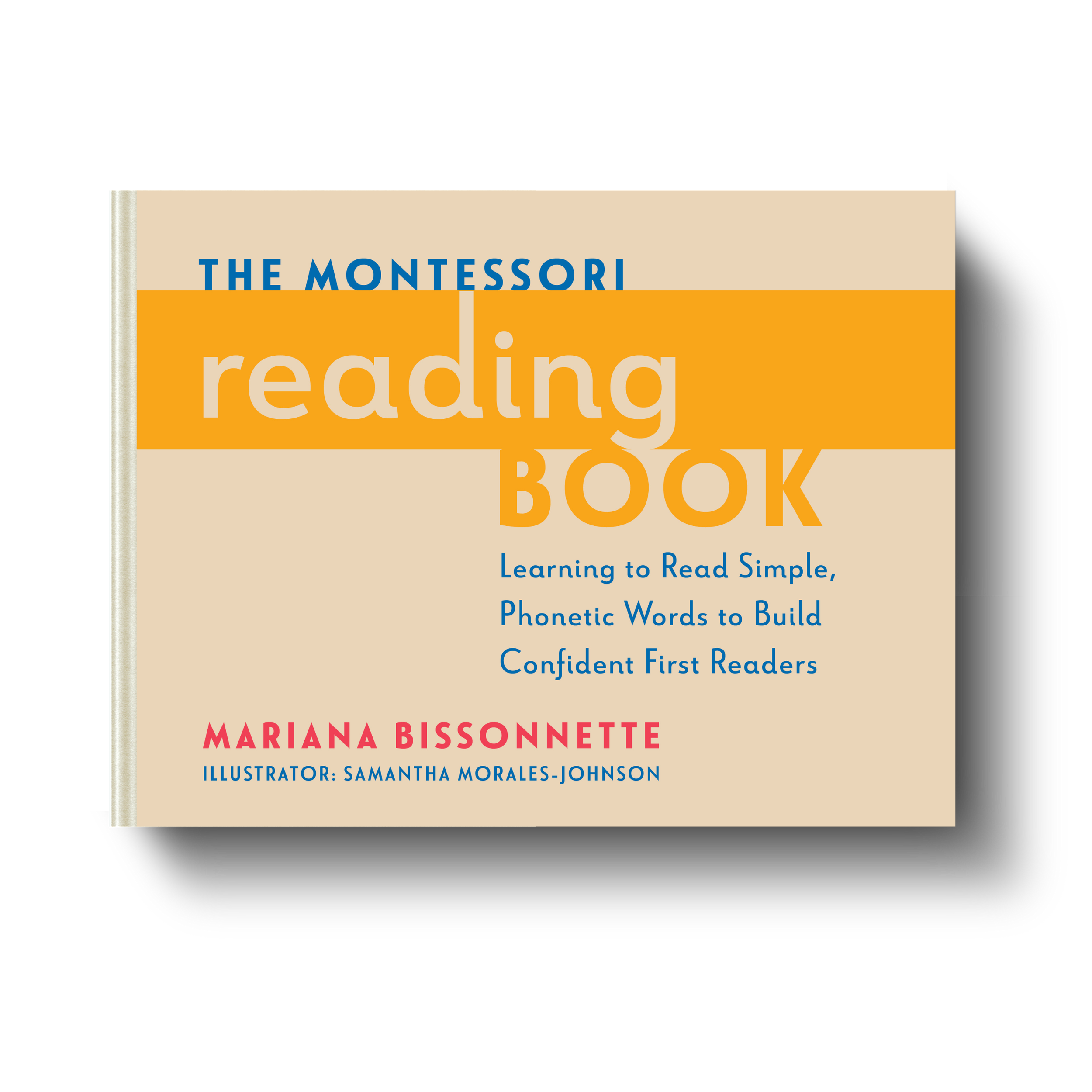
The Montessori Reading Book
Learning to Read Simple, Phonetic Words to Build Confident First Readers
With the work done in Books 1–3, it’s time to see whether the child has realized they can put that work into reverse—to read.
While this moment is exciting, the role of the adult now shifts from what it has been in the previous three books. Until now, the adult has been more directly “teaching”—introducing sounds and symbols and guiding the mechanics of writing. This was essential because, as we learned in the Science of Reading: literacy doesn’t happen naturally; it must be taught. But this moment is different. Now, the child does not need an adult to teach them to read—they need an adult who can give them the space to discover that they already can. And if they need more fundamentals, simply return to Books 1–3 with enthusiasm, not disappointment. You see, when you step out of the role of “teacher,” you allow the child to step into that role for themselves—what Dr. Montessori called auto-education. This is what creates a lifelong love of reading, because the work belongs to the child.
Montessori Literacy Made Simple
A sound-first path to reading—built the way the brain learns.
Reading doesn’t begin with memorizing letters or repeating words read aloud by adults. It begins with sound. And when literacy is built in the right order, reading isn’t taught—it’s discovered.
The Montessori Early Literacy Series is a four-book, developmentally aligned approach to reading, writing, and spelling—designed for children ages 2–6 and the adults guiding them. Rooted in Montessori education and the Science of Reading, this series follows the natural progression of how the brain learns to read: from sound, to symbol, to writing, to independent reading.
Rather than rushing children into memorization or performance, these books build strong foundations that allow reading to emerge intuitively, confidently, and joyfully.
What Makes This Series Different
Most early literacy programs focus on what reading looks like. This series focuses on how reading works.
Sounds come before letter names
Writing comes before reading
Decoding comes before memorization
Discovery replaces instruction at the right moment
Each book isolates exactly what the child’s brain needs at that stage—nothing more, nothing less—so learning sticks.
Praise for This Series
“This reads like it was written by someone who deeply understands children, respects adults, and knows exactly what belongs — and what doesn’t — at each stage of learning.”
The Montessori Early Literacy Series
Book 1
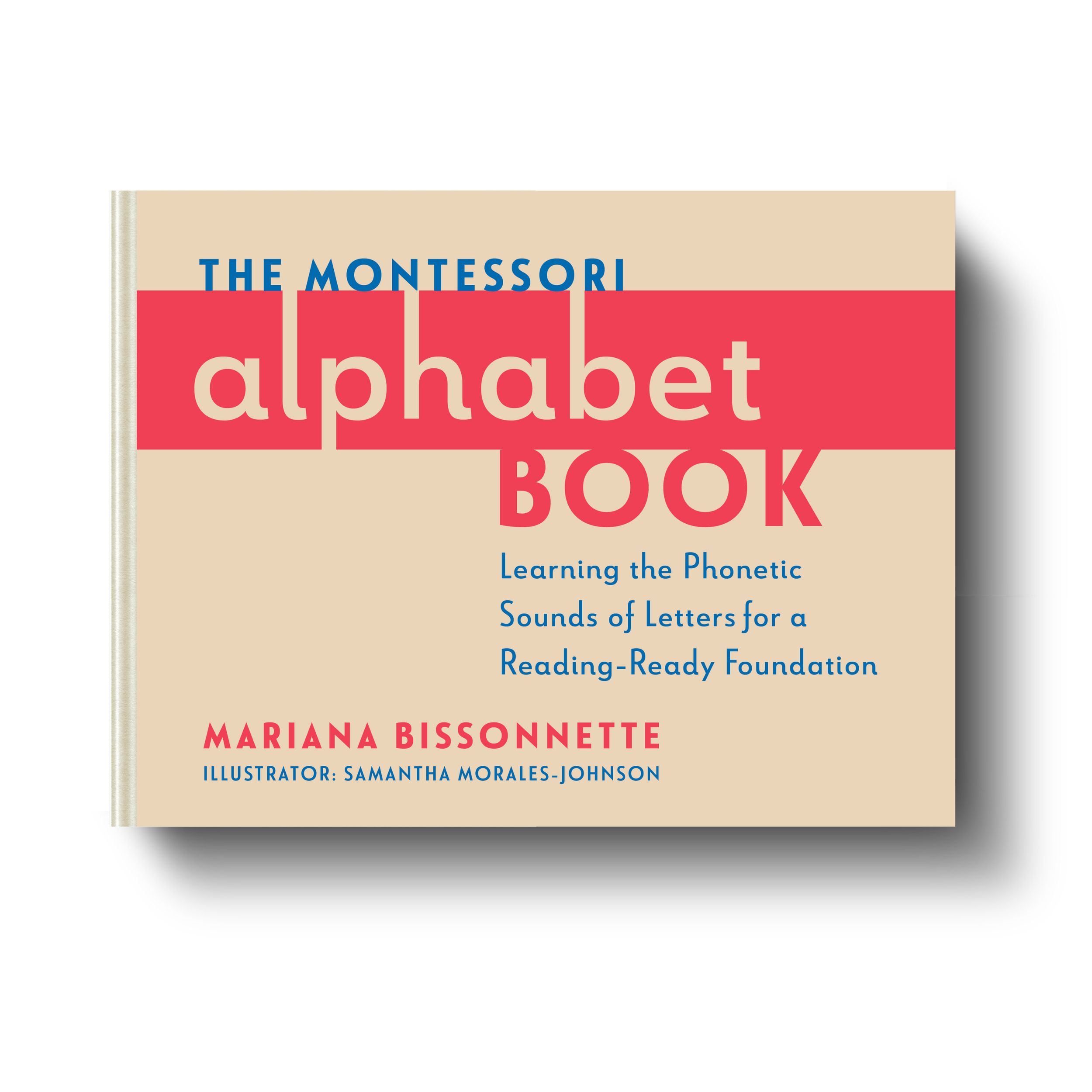
THE MONTESSORI ALPHABET BOOK
Most alphabet books focus on letter names—but it’s the sounds that unlock reading.
This Montessori-aligned alphabet book is the first in the Montessori Early Literacy Series. Your child will learn the phonetic sounds that truly unlock reading and writing—not just the letter names that encourage memorization. With gentle guidance and clear examples, you’ll confidently support your child’s first steps into literacy.
Drawing from the Science of Reading and years of Montessori classroom experience, this book provides a developmentally sound and child-friendly approach to literacy.
Strong readers start with sounds.
Book 2
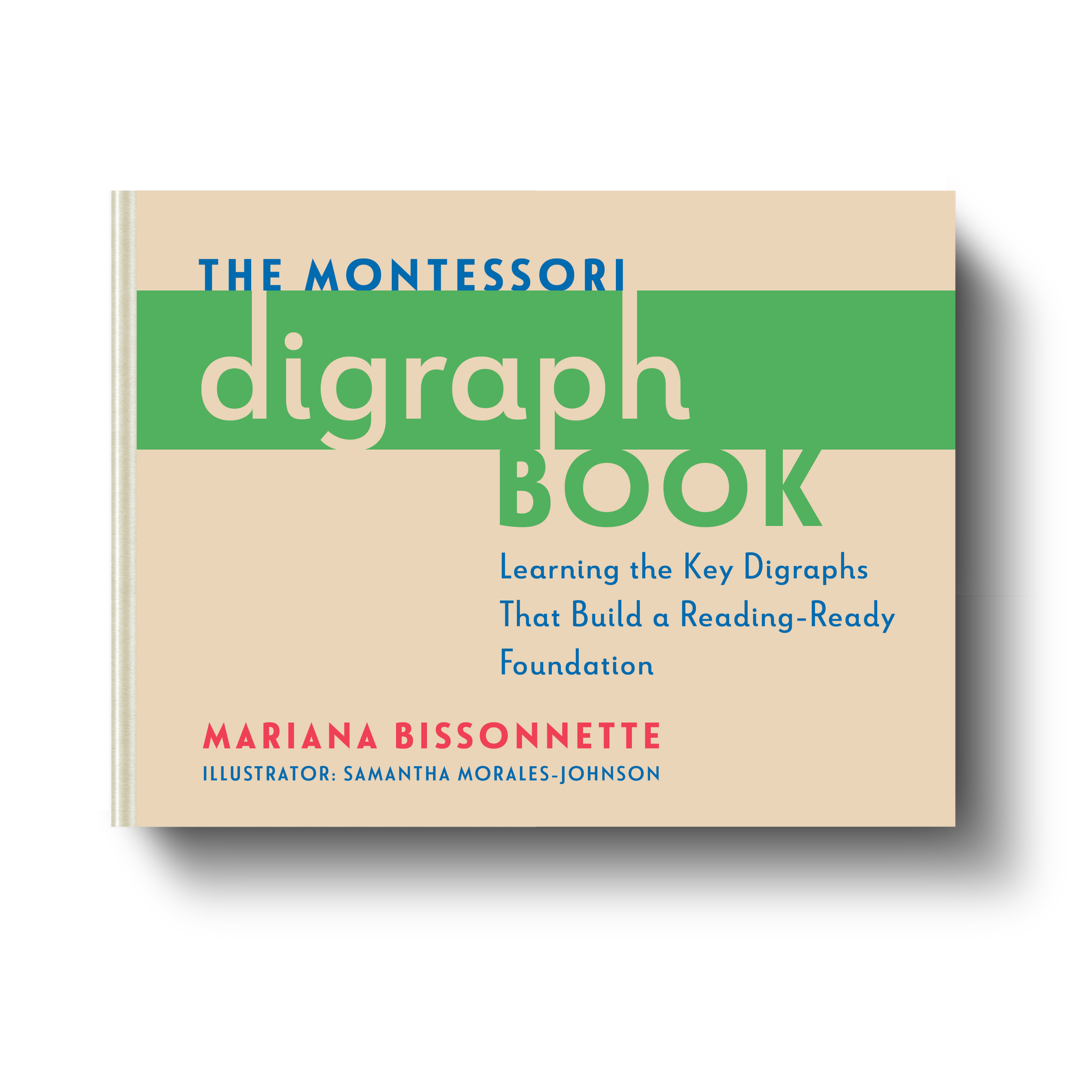
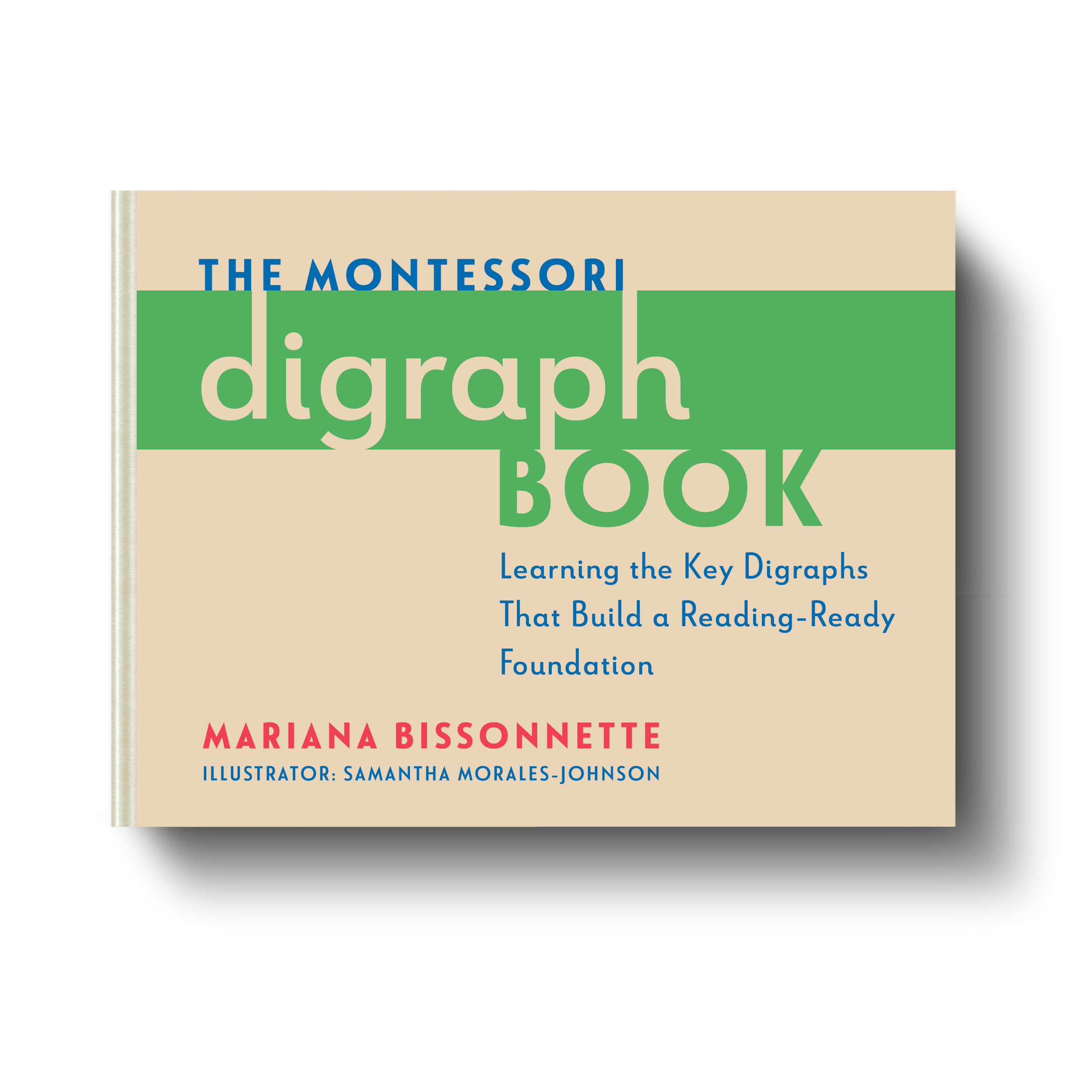
THE MONTESSORI DIGRAPH BOOK
After single-letter sounds, digraphs open the door to reading success.
The second book in the Montessori Early Literacy Series introduces key two-letter sounds, called digraphs—like shand ch. These sounds are essential for confident reading and writing, yet are often skipped in conventional alphabet progressions. With clear examples and simple guidance, you’ll help your child recognize and practice them successfully.
Drawing from the Science of Reading and years of Montessori classroom experience, this book provides a developmentally sound and child-friendly approach to literacy.
Unlock reading with two-letter sounds.
Book 3
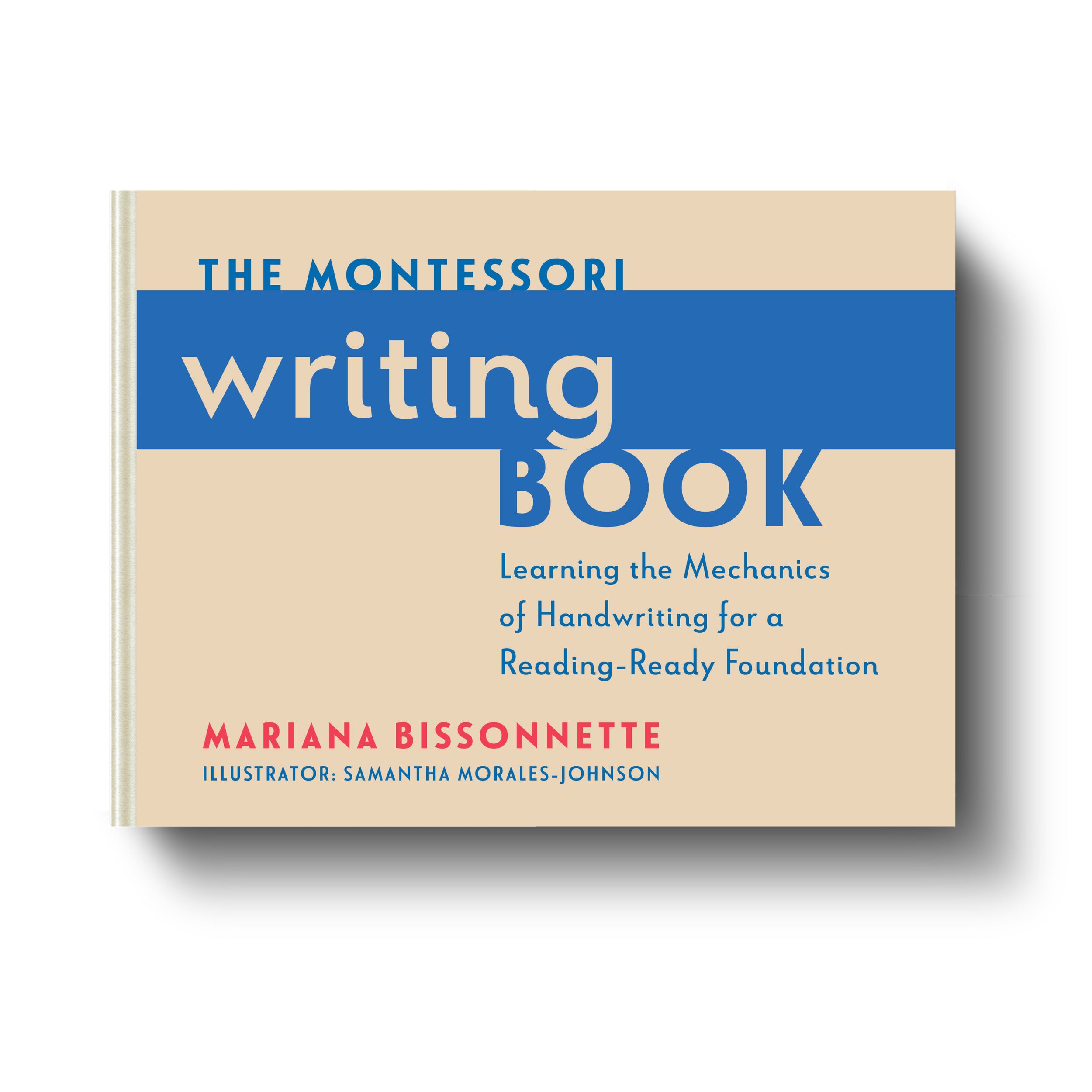
THE MONTESSORI WRITING BOOK
Writing comes before reading—and for good reason.
This third book in the Montessori Early Literacy Series guides your child from single and double-letter sounds to building words through handwriting. Use it to coach your child in forming letters, or let it serve as an independent reference for practice. With step-by-step guidance and foundational letter-shape exercises, this book makes handwriting approachable and enjoyable.
Drawing from the Science of Reading and years of Montessori classroom experience, this book provides a developmentally sound and child-friendly approach to literacy.
Jumpstart your child’s reading through hands-on writing practice.
Book 4
THE MONTESSORI READING BOOK
Finally—a first reader your child can actually read.
Unlike many first readers that introduce words, sounds, or spellings your child hasn’t learned—like silent e, irregular spellings, or new letter combinations—this fourth book in the Montessori Early Literacy Series builds directly on the letters, digraphs, and writing your child already knows. Every word is carefully chosen so your child can decode independently, making reading feel natural, achievable, and motivating.
Drawing from the Science of Reading and years of Montessori classroom experience, this book provides a developmentally sound and child-friendly approach to literacy.
First reading, first confidence—one decodable word at a time.
“As Millennial parents, we had different experiences learning to read, and we weren’t sure how to support our child—the Montessori Reading & Writing books filled in the gaps while also ensuring we had fun during this process! These books are easy to understand, provide context for the developmental stage, and explained why introducing reading this way is critical!”
—Britt
Meet the Author & Illustrator
Mariana Bissonnette

AUTHOR
Mariana Bissonnette (she/her) is a Montessori educator, coach, parent-educator, and author with over a decade of classroom experience teaching children ages 18 months through six years. She is trained by the Association Montessori Internationale (AMI) for ages 0–3 (2016) and 3–6 (2012), and is currently a 3–6 trainer-in-training (2024). Mariana also holds an MA in Economics (2009) and a BA in Latin American & Latino Studies (2005).
Her deep experience in Montessori classrooms, particularly teaching literacy, inspired The Montessori Alphabet Book, The Montessori Digraph Book, The Montessori Writing Book, and The Montessori Reading Book. While working with children, Mariana noticed a persistent problem: the alphabet and handwriting materials available to parents were often confusing and inconsistent, and many relied heavily on letter names rather than sounds—the very thing that can slow a child’s progress in reading and writing. Teachers often had only single-page cursive letter sheets or had to provide time-intensive individual lessons, making it difficult to consistently support children’s literacy development.
Mariana envisioned a series of books that would guide children from foundational sounds to confident reading and writing—without the frustration of conventional alphabet books. Her books focus on letters by sounds, step-by-step handwriting progression, and a developmentally appropriate approach that respects the natural path of learning.
With this series, Mariana provides parents and Montessori educators with tools to teach literacy in a way that is accessible, effective, and enjoyable. Her work is informed by years of classroom experience, consulting with over 3,000 families worldwide, and a commitment to making Montessori education practical and liberatory for all children.

Samantha Morales-Johnson
ILLUSTRATOR
Samantha Morales-Johnson (she/her) is a Southern California native and an active member of her tribe, the Gabreleno/Tongva Band of Mission Indians. Samantha is a science illustrator and strongly believes in the importance of illustrated books beyond childhood. She also enjoys teaching children (particularly swimming)!
You can see more of Samantha’s work in Mariana’s first book, Babies Build Toddlers: A Montessori Guide to Parenting the First 18 Months where Samatha did the illustrations for the chapter on Movement.